Historic Low Inventory: Inside the Spring 2021 Market

Real Estate Broker · Douglas County, OR
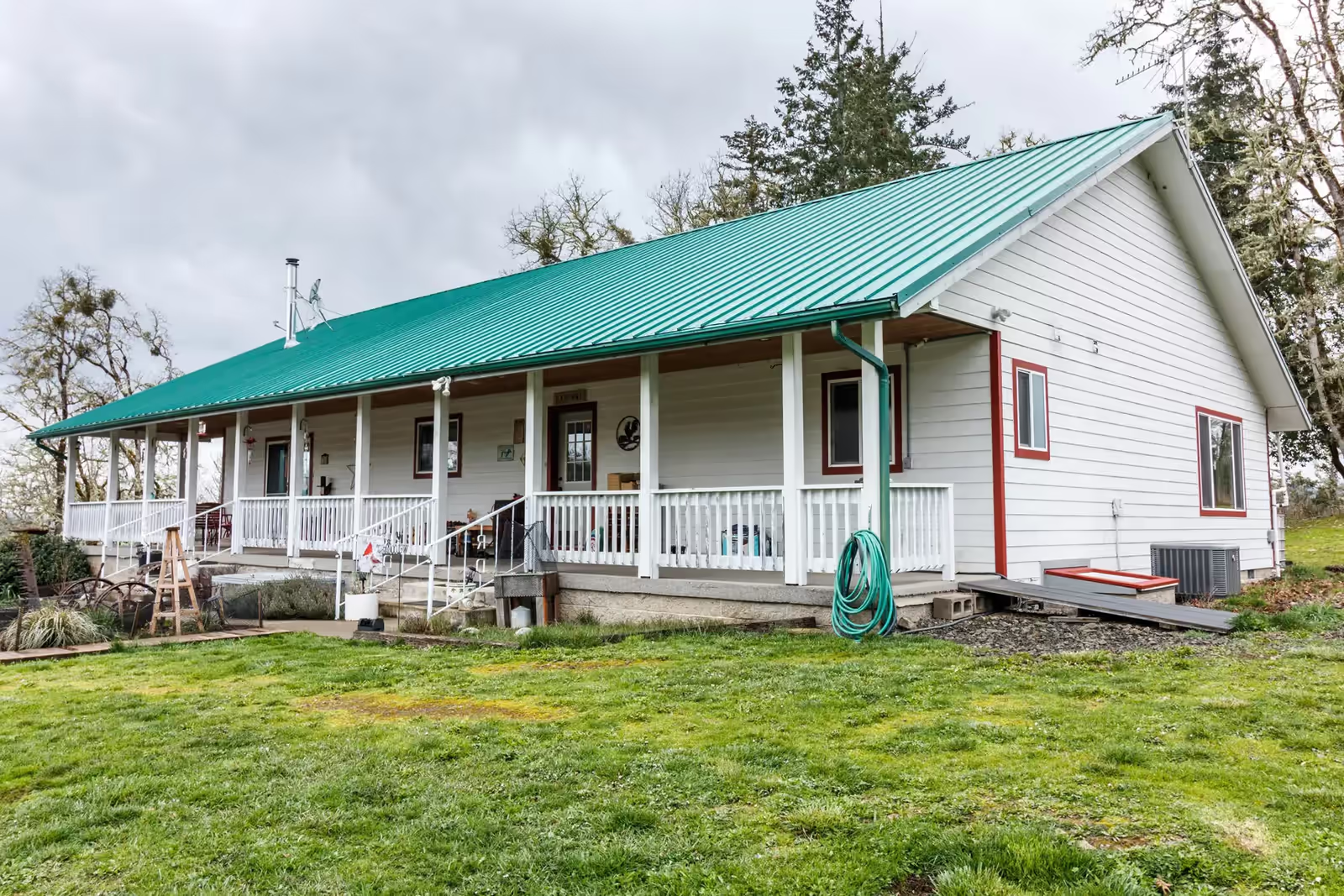
Spring has arrived in Southern Oregon, and with it one of the most unusual housing markets in recent memory. The conditions that defined 2020, low inventory and surging demand, have only intensified heading into the new season. Here is what the data shows about Douglas County, and what it means for anyone thinking about buying, selling, or simply staying put.
Real Estate: Douglas County Market Snapshot
Related Reading
Comparing 2021 to 2020 through February, the average sale price has increased 26.4% from $229,300 to $289,900. In the same comparison, the median sale price has increased 20.0% from $220,000 to $264,000. Inventory decreased to 1.6 months in February. Total market time decreased to 50 days.
Housing Inventory in Douglas County
Months of Supply · February 2018 – February 2021
Source: Douglas County RMLS monthly data, reconstructed from the April 2021 Oregon Life Homes newsletter. Months of supply = active listings ÷ monthly sales pace. A balanced market historically runs ~6 months.
For roughly three years, from February 2018 through May 2020, Douglas County maintained a steady 3 to 4 months of inventory, the kind of balanced supply we used to take for granted. Then the second half of 2020 changed everything. Inventory collapsed month over month: 3.2 in May 2020 fell to 2.0 in June, 1.9 in July, 1.5 in August, 1.1 by December, and 1.6 as of February 2021. That is the lowest reading in well over a decade.
Housing Inventory at Historic Lows
To understand the housing inventory in 2021, let us first look at the reasons the 2020 market has been, shall we say, unique. Part of the reason for low inventory in 2020 was seller uncertainty. And not uncertainty about whether homeowners can sell; the uncertainty comes from what they will do after they sell.
Because of this insatiable demand for housing, homeowners are torn on what to do. On one hand, they can get top dollar for their home (assuming it is in reasonable condition) if they list now, and quickly too, as houses are not staying on the market long. But many are afraid they might not get another house they can afford in this market. So homeowners are generally holding on to what they have, slightly more now than last year, further decreasing inventory.
As far as foreclosures: while more are expected to happen in 2021 due to people losing their jobs from the coronavirus pandemic, depending on how the new administration reacts regarding stimulus and forbearance, there might not be the numbers of foreclosures as there normally might otherwise be, further lessening supply.
Demand, Prices, and Extenuating Circumstances
The real estate market always tries to reach equilibrium: the perfect match between sellers and buyers. But that can take time. Because the 2020 market was nowhere near this, instead a huge seller's market, 2021 will be trying to reach equilibrium. So expect to see more of the same until this equilibrium happens: low inventory, high demand, rising prices, and low interest rates.
Demand
Demand for houses should remain high in 2021. Low interest rates have a lot to do with this: rates are not expected to go much higher than 3% for 2021. Combine that with millennials entering their homebuying years, and demand should remain strong this year. This group of 24- to 39-year-olds who have been putting off homebuying longer than past generations is finally settling down.
Prices
The way the market handles low inventory combined with strong demand is with rising prices. This year, prices might rise to the point of keeping many first-time buyers from being able to purchase, as coming up with a down payment could prove to be too big a hurdle. With that said, savings are at historic highs, so many first-time homebuyers, although they do not have home equity in their arsenal, they do have money in the bank.
Extenuating Circumstances and Increased Demand
The coronavirus pandemic (a reason for practically everything in 2020). People who were content as renters in urban cities started leaving for social distancing reasons. Their destination: the suburbs and exurbs, particularly since working from home has become a thing, not to mention as cities locked down, there was nothing much to do in them anymore.

The Buyer Wishlist
A single list of what "all" home buyers want is impossible. But here are some trends that seem to apply broadly. The short list is any house at all. The longer list is below.
1. Open concept homes are still popular.
The idea of a "great room" still resonates.
2. Smaller homes are more attractive than "McMansions."
They are easier to heat and maintain.
3. Correct spaces are more important than large spaces.
A laundry room, an office or "zoom room," an eat-in kitchen, and an outdoor patio are top requests.
4. Green or smart features that enable more energy efficiency.
This includes appliances, efficient windows, and smart lighting and thermostats.
5. Storage, inside and out.
Pantries, garages with organized storage, kitchen cabinets, and plenty of closets (though a walk-in closet is not a top priority any more).
Before doing anything to your house "to get a better offer," talk to me about what buyers in your area want. I can tell you what would make the biggest difference, and it might be as simple as some paint and cleaning. Set an appointment for a walk-through and home valuation. I would be happy to offer specific insight for your home: (541) 391-1623. If the work needs funding, our Strategic Improvement Program can coordinate the upgrades and reimburse the costs at closing.
Baby Boomers: A Lifestyle Crisis?
250,000 Americans celebrate their 65th birthdays each month. Baby Boomers are retiring in large numbers and many do not have enough saved for their retirement. Beyond a lack of planning, a key reason Baby Boomers lack retirement savings is due to the 2008 financial crisis, as well as the chronic low interest rates since. The stock market losses of the COVID-19 pandemic are adding to the shortfall.
Baby Boomers have an average of $152,000 saved for retirement, according to the 19th Annual Retirement Survey of Workers conducted by the TransAmerica Center for Retirement Studies. This is not nearly enough to last through retirement. Based on information from the Bureau of Labor Statistics, adults between ages 65 and 74 spend, on average, $48,885 a year.
According to records from the U.S. Census Bureau, baby boomers, those born between 1946 and 1964, number 73 million. Also notable: 2031 marks the year that the youngest boomers, those born in 1964, will turn 67, making them eligible to receive Social Security benefits. Research by the Insured Retirement Institute (IRI) also suggests trouble for many retiring Boomers. IRI found that 45% have no retirement savings. Out of the 55% who do, 28% have less than $100,000. This suggests that approximately half of retirees are, or will be, living off of their Social Security benefits.
According to the Social Security Administration, 90% of retirees today receive Social Security benefits, in contrast to only 69% of retirees in 1962. The average Social Security benefit is $1,503 per month in 2020, substantially less than the average wage, which is approximately $3,668, according to the Bureau of Labor Statistics.
Whether or not this can be called a crisis depends on which Boomers are being discussed, including the types of assets they can access. Boomers who own their own homes in an area with a lower cost of living may be able to live on quite a bit less than a rent-paying retiree in a major metropolitan area. For those depending on Social Security benefits in their senior years, maintaining a comfortable lifestyle in retirement will likely be difficult. But whether Baby Boomers are in a retirement crisis depends on how you measure the situation, where they are living, and how their circumstances compare with their predecessors. It is crucial retirees have the right mindset about their lifestyle in retirement. You should start making lifestyle adjustments before you retire.
What This Means for You
If you have been thinking about selling, this is one of the rare moments when nearly every market force is working in your favor. A good pricing and marketing strategy is the difference between a quick top-dollar close and one that drags. If you are a buyer, it pays to come prepared: pre-approved, decisive, and willing to write a clean offer quickly. Call, text, or email anytime for a referral to a strong local lender. Either way, knowing the local data is what separates a confident decision from a stressful one.